
Pharmacy technician resume examples built on the pay ladder.
The pharmacy-tech resume has one job most applicants miss: it decides which pay band you land in. Retail runs about $38K, hospital about $49K, and specialty/prior-auth work higher still — and the difference on paper is a handful of keywords and metrics. Screeners filter on the credential first (CPhT appears in roughly 62% of postings) and the state registration number right after; then hiring pharmacists read for the numbers a pharmacy actually tracks — scripts a day, accuracy rate, dispensing errors, C-II audit compliance. This guide shows the format for each rung, plus the certification and compounding details that unlock the next one.
- Ideal length
- 1 page
- Credential
- CPhT + license #, top
- Setting premium
- Hospital ~25% over retail
- Bullets per role
- 3–5
Devon Ellis, CPhT
Hospital Pharmacy Technician · Sterile Compounding (CSPT)
Cleveland, OH
Summary
Certified pharmacy technician (CPhT, CSPT) with 6 years, currently in a 500-bed hospital IV room. Compound 120+ sterile preparations a shift under USP <797>/<800> with zero contamination events across two annual audits; manage the C-II perpetual inventory to 100% audit compliance. Started retail at 140 scripts a day in PioneerRx before crossing to inpatient — Epic Willow, Pyxis and Omnicell daily. Trained 4 techs on aseptic technique.
Experience
Pharmacy Technician II — IV Room · Lakeside Regional Medical Center (500 beds)
2022 — Present
- Compound 120+ sterile preparations a shift (IV admixtures, TPN, chemo) under USP <797> and <800>; zero contamination events across two annual competency audits.
- Own the C-II controlled-substance perpetual inventory for the department — 100% audit compliance across three years, zero unresolved discrepancies.
- Stock and reconcile Pyxis and Omnicell automated cabinets across 6 units; cut stockout events 30% by tightening par-level reviews.
- Trained 4 new technicians on aseptic technique and beyond-use dating to independent competency.
Pharmacy Technician · Guardian Drug (retail chain)
2019 — 2022
- Processed 140+ prescriptions a day in PioneerRx at 99.6% accuracy — zero dispensing errors logged in an 18-month stretch.
- Resolved insurance rejections and prior authorizations on the spot; cut average patient wait time from 18 to 11 minutes by re-sequencing the fill workflow.
- Ran refill synchronization for 300+ chronic-med patients and supported the immunization schedule during flu season.
Pharmacy Technician Trainee · Guardian Drug
2018 — 2019
- Hired as a trainee and earned CPhT within 7 months (employer-sponsored PTCE); Ohio registration active before the deadline.
- Learned data entry, POS, inventory restock and HIPAA-compliant patient handling at a 250-script-a-day counter.
Skills
Education
Pharmacy Technician Program (PTCB-recognized) — Cuyahoga Community College, 2018
Certifications
CPhT — PTCB, active (renews 2027) · CSPT — PTCB (sterile compounding), 2023 · Ohio Registered Pharmacy Technician, Reg. #03-XXXXXX · BLS/CPR
Languages
English (native) · Spanish (conversational)
Why this example works
Credential and registration number up top
CPhT after the name, plus the state registration number in the certifications block. The cert appears in ~62% of postings and boards verify the registration number — make both instant to find, and never omit the number.
The numbers a pharmacy actually tracks
Scripts per day, accuracy rate, dispensing errors (“0 in 18 months”), C-II audit compliance, compounding volume. These are logged in every pharmacy system — quoting them is what separates a tech who fills from one who runs the bench.
Compounding keywords cross the pay band
USP <797>/<800>, CSPT, Pyxis, Epic Willow — the exact tokens that move a resume from the ~$38K retail band into the ~$49K hospital band. The retail-to-hospital story is the whole arc of this sample.
Pharmacy Technician resume summary examples
Three to four lines: scope, stack or specialism, one quantified win. Match the register to your seniority.
Entry / trainee
Pharmacy technician trainee with retail-counter experience and CPhT in progress (PTCB exam scheduled, education pathway complete). Comfortable at a 200-script-a-day counter: data entry, POS, insurance basics, HIPAA-compliant patient handling. Dependable, accuracy-obsessed, and open to the overnight and weekend shifts that build the fastest. Objective: a technician seat where I can certify and grow toward hospital work.
Retail pharmacy technician
CPhT with 4 years in high-volume retail: 160+ scripts a day at 99.5% accuracy, insurance adjudication and prior authorizations resolved at the window, refill sync for 350+ chronic-med patients. Immunization-clinic support through two flu seasons; wait time on my shifts consistently below store target. The tech the pharmacist doesn't have to double-check.
Hospital pharmacy technician
Hospital pharmacy technician (CPhT) with 5 years inpatient: unit-dose and cart fill, Pyxis and Omnicell stocking across 8 units, medication reconciliation support, and C-II perpetual inventory at 100% audit compliance. Epic Willow fluent. Made the retail-to-hospital jump and never looked back — the pace is different and the accuracy stakes are higher, which is exactly the point.
Sterile compounding (IV room)
Sterile compounding technician (CPhT, CSPT) with 6 years in the IV room: 120+ preparations a shift — IV admixtures, TPN, hazardous drugs — under USP <797> and <800>, zero contamination events across four competency audits. Aseptic technique I now teach; beyond-use dating and garbing discipline that pass every inspection. The bench nobody worries about.
Specialty pharmacy (prior-auth heavy)
Specialty pharmacy technician (CPhT) with 5 years in prior authorization and benefits investigation: 40+ PA cases a day, 92% first-submission approval rate, appeals turned around inside 48 hours. Fluent in PBM adjudication, patient-assistance programs and the copay-card maze that keeps expensive therapies affordable. I get the drug approved before the patient calls to ask.
Lead technician / inventory specialist
Lead pharmacy technician (CPhT) with 8 years, running purchasing and inventory for a health-system pharmacy: $2.4M perpetual inventory managed, C-II audits clean for four straight years, 340B compliance owned. Rebuilt par levels to cut carrying cost 12% without a single stockout. Schedule and train a 9-tech team; tech-check-tech certified. Ready for the informatics or purchasing seat next.
Skills that belong on a pharmacy technician resume
Dispensing & clinical
- Prescription processing
- Dosage calculations
- Medication reconciliation
- Unit-dose / cart fill
- Immunization support
- Patient counseling handoff (to pharmacist)
Compounding & inventory
- Sterile compounding (USP <797>/<800>)
- IV admixture / TPN
- Non-sterile compounding (USP <795>)
- Beyond-use dating (BUD)
- C-II perpetual inventory
- Automated cabinets (Pyxis, Omnicell)
Systems & compliance
- Epic Willow / Cerner
- PioneerRx / QS-1 / Rx30
- Insurance adjudication & prior auth
- HIPAA compliance
- Tech-check-tech
- Technician training
Bullet point formulas that get interviews
Fill the brackets with your numbers — the structure does the selling.
- Processed [n]+ scripts a day at [x]% accuracy — e.g. “140+ scripts a day in PioneerRx at 99.6% accuracy.”
- Logged zero dispensing errors over [period] — e.g. “0 dispensing errors in 18 months.”
- Compounded [n]+ sterile prep/shift under USP — e.g. “120+ IV preparations a shift under USP <797>/<800>, zero contamination events.”
- Held C-II inventory at [audit result] — e.g. “100% C-II audit compliance across three years.”
- Resolved [n] prior auths / cut wait time — e.g. “Cut average wait time from 18 to 11 minutes; PA approvals at 92% first submission.”
- Managed $[value] inventory / [savings] — e.g. “$2.4M perpetual inventory; par-level rebuild cut carrying cost 12%.”
- Ran refill sync for [n] patients — e.g. “Refill synchronization for 350+ chronic-med patients.”
- Supported [n] immunizations — e.g. “Prepped and supported 200+ flu-season immunizations.”
- Trained [n] technicians — e.g. “Trained 4 techs on aseptic technique to independent competency.”
- Earned [credential] in [timeframe] — e.g. “CPhT within 7 months of hire via employer-sponsored PTCE.”
ATS keywords for pharmacy technician roles
Filters match tokens from the posting. These are the terms worth mirroring — verbatim — when they appear in the job ad.
| Keyword | Priority |
|---|---|
| CPhT / Certified Pharmacy Technician (PTCB) — in ~62% of postings | High |
| state license / registration number | High |
| prescription processing + volume (scripts/day) | High |
| insurance adjudication / prior authorization | High |
| dosage calculations | High |
| HIPAA compliance | High |
| controlled substances / C-II inventory | High |
| pharmacy systems by name: Epic Willow, Cerner, PioneerRx, Pyxis, Omnicell | High |
| customer service / patient care | High |
| sterile compounding / USP <797> / <800> / IV admixture (hospital & IV roles) | Medium |
| non-sterile compounding / USP <795> / beyond-use dating | Medium |
| medication reconciliation / unit-dose | Medium |
| CSPT (sterile-compounding credential) | Medium |
| tech-check-tech / immunization support | Medium |
| retail-specific: POS, drive-thru, data entry, inventory restock | Medium |
Don't guess — score your resume against the specific posting and see exactly which terms are missing.
How to write a pharmacy technician resume
Put CPhT and your registration number where the filter looks
CPhT after your name, then a certifications block with the credential (issuing body + expiry) and your state registration number. The cert is in roughly 62% of postings and boards verify the number — burying either wastes your strongest screening tokens. Spell out “Certified Pharmacy Technician (PTCB)” once for the parser.
Quantify the four numbers every pharmacy tracks
Scripts per day, accuracy rate, dispensing errors over a period, and audit compliance. “Filled prescriptions accurately” is every tech's line; “140+ scripts a day at 99.6%, zero errors in 18 months” is a hire. The systems log all of it — pull your numbers before you write.
Load the keywords that cross the pay band you want
Retail sits around $38K, hospital around $49K, and the difference on paper is vocabulary: sterile compounding, USP <797>/<800>, Pyxis/Omnicell, Epic Willow, C-II inventory, medication reconciliation. If you're aiming inpatient, get those tokens on the page (honestly) — they're what the hospital screen filters for.
Name the pharmacy system, not “pharmacy software”
PioneerRx, QS-1, Rx30 in retail; Epic Willow, Cerner, Pyxis, Omnicell in hospital. Screeners search the exact product, and pharmacists staff faster when they don't have to train the system. Mirror whichever the posting names, and list the rest you genuinely run.
Entry-level: lead with the certification pathway and any externship
New techs win on trajectory: CPhT earned or in progress (name the PTCB pathway), the recognized training program, externship hours, and accuracy from any counter time. Employers like CVS and Walgreens hire trainees and sponsor certification — showing you're already on that track, or done with it, is the differentiator over a blank-slate applicant.
Skip the blank page.
Build this resume in Resumap — free templates, unwatermarked PDF, and an ATS check against the exact posting when you're ready.
Start freeMistakes that filter pharmacy technicians out
CPhT or the registration number missing
Both are primary screening tokens and both get verified. Credential after your name, registration number in the certifications block — never omit either.
“Filled prescriptions and helped customers”
Describes every tech alive. Scripts per day, accuracy percentage, error-free streak, wait-time reduction — the counter already tracks all of it.
One resume for retail and hospital
They screen on different keyword clusters (POS and drive-thru vs USP <797> and Pyxis). Re-weight the skills and top bullets for the setting you're targeting.
“Pharmacy software” with no product named
PioneerRx, Epic Willow, QS-1, Pyxis — the exact system is the searched keyword, and claiming one you can't operate surfaces fast in a verification-heavy field.
Claiming skills you can't defend
Sterile compounding and prior-auth work get tested in the interview and on day one. List what you've genuinely done; aspiration goes in the summary as a goal, not in skills as a fact.
Leaving off externship / volunteer hours (entry-level)
For a first job they're the whole experience section — hours, setting, script volume handled under supervision. Quantify them like a job.
Typos in an accuracy-critical field
The job is precision under volume; a sloppy resume contradicts the core skill. Proofread, then have someone else proofread.
Pharmacy Technician salary ranges (US)
United States market. Absolute figures differ by country — the gaps between levels travel better than the numbers.
| Entry / trainee | $31K – $38K |
| Retail pharmacy tech | $36K – $44K |
| Hospital / inpatient | $45K – $55K |
| Specialty / prior-auth | $45K – $61K |
| Lead / inventory specialist | $50K – $60K+ |
BLS median for pharmacy technicians is $43,460 (May 2024; +6% growth, ~46,000 openings a year). Setting drives pay: hospitals and ambulatory care run ~$49K against retail's ~$38K — a $10–11K spread that sterile compounding and inventory keywords help you cross. Walgreens' published band is $15.00–$20.50/hour; chain figures elsewhere are self-reported ($17–24) — treat them as ranges.
Primary source: U.S. Bureau of Labor Statistics (OEWS/OOH). Self-reported aggregator figures are labelled as such.
Certifications worth listing
- PTCB CPhT ($129 exam, $55 renewal every 2 years) — the gold standard, hospital-preferred; two eligibility pathways since 2020 (recognized training program OR ~500 hours of work experience)
- NHA ExCPT ($129) — same economics, retail-workflow focus; accepted in all 50 states, but PTCB carries more weight for hospital roles
- CSPT (PTCB) — the sterile-compounding credential that unlocks IV-room and hazardous-drug work; requires an active CPhT plus compounding experience
- State registration/license — most states require it (a few, including Delaware, Hawaii and Pennsylvania, don't); check the live PTCB state map, and put your number on the resume
- Employer-sponsored paths are real: CVS and Walgreens hire trainees and require certification within several months of hire (varies by state)
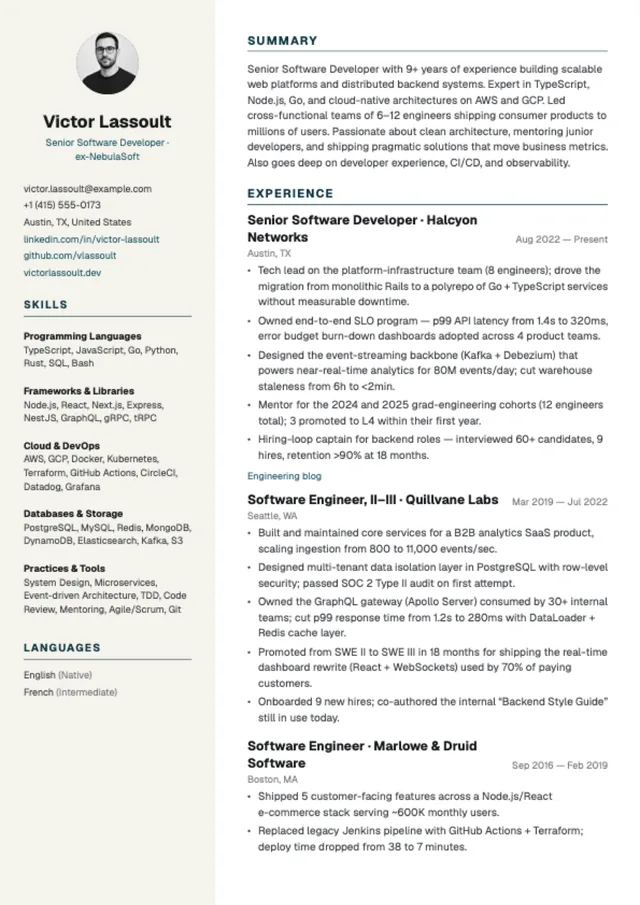
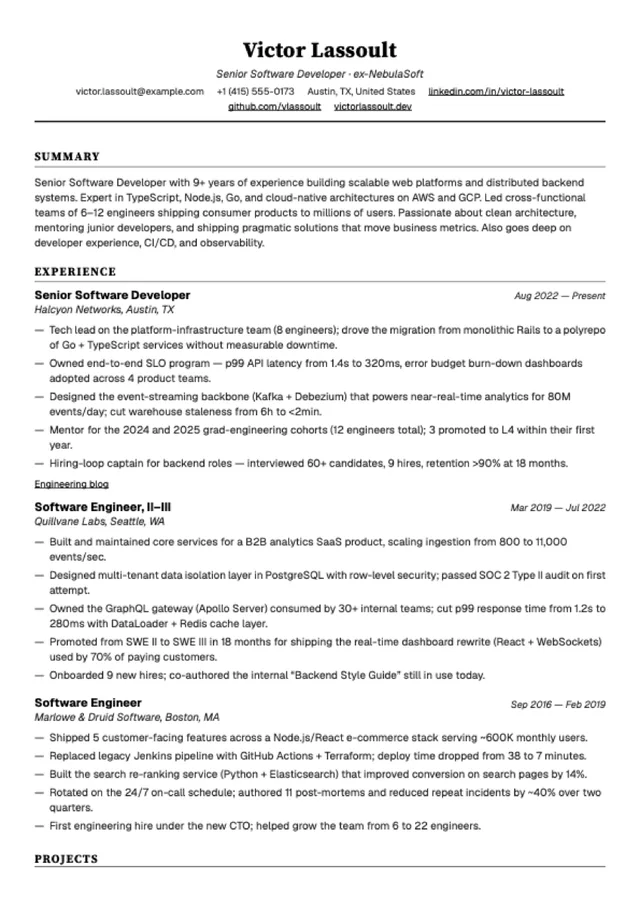
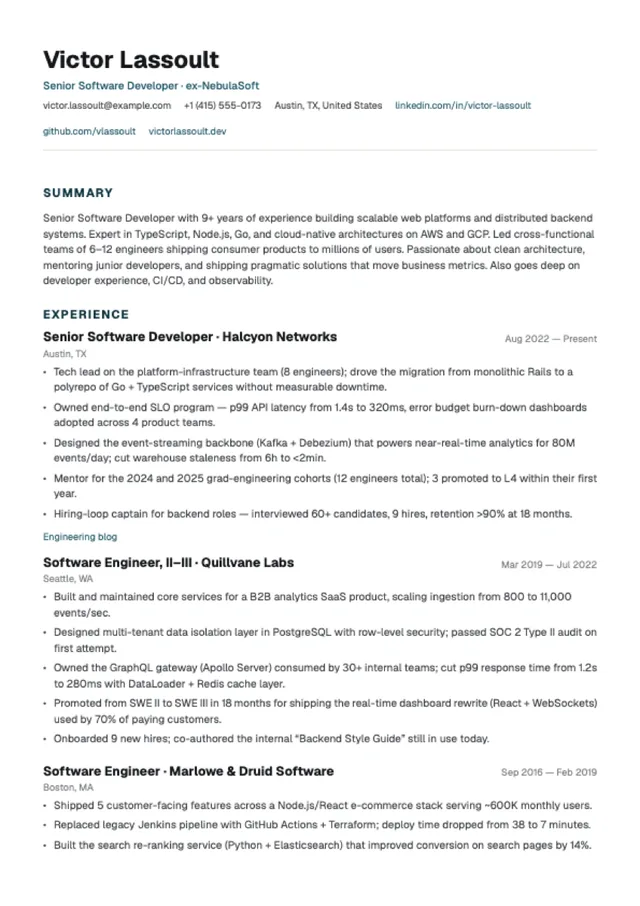
Templates that fit pharmacy technician resumes
Pharmacy Technician resume FAQ
Do I need to be certified before I'm hired?
Often not — many techs start as trainees. CVS and Walgreens hire uncertified and then require you to earn the CPhT within a set window (typically several months, varies by state), with the employer frequently sponsoring the exam. That said, arriving already certified widens your options and pay from day one. If you're new, get on the PTCB pathway and say so on the resume — trajectory beats a blank slate.
PTCB or NHA ExCPT — which certification?
Both cost $129, both renew at $55 every two years, and all 50 states accept either. The difference is reputation and focus: the PTCB CPhT is the gold standard with clinical and med-calc rigor and is preferred by hospitals; the ExCPT leans retail-workflow. If you have any hospital or specialty ambition, default to PTCB — it's the one that travels furthest.
How do I move from retail to hospital?
It's the classic upgrade, worth roughly $10–11K a year, and the resume does the work: add sterile-compounding exposure (and ideally the CSPT credential), learn Epic Willow and the automated cabinets (Pyxis, Omnicell), and foreground C-II inventory and medication reconciliation. Hospitals screen for those exact keywords — get them on the page honestly and the pay band moves with you.
Which pharmacy systems should I name?
The ones the posting names, first. Retail runs PioneerRx, QS-1, Rx30, BestRx; hospitals run Epic Willow, Cerner, plus Pyxis and Omnicell for automation. Screeners search the exact product and pharmacists hire faster when there's no system to train. List every one you genuinely operate — multi-system fluency is a real asset — and never claim one you haven't used.
What's the career ladder beyond the counter?
Several real ones: tech-check-tech and lead/inventory specialist, then pharmacy informatics (managing automation and systems — a growing, higher-paid role), purchasing and 340B compliance, specialty and prior-auth work, or the mail-order/central-fill route. Some techs use the experience as a runway to pharmacy school (PharmD). Each rung is built from bullets you can start collecting now: audits owned, techs trained, systems mastered, inventory managed.
Is the Amazon Pharmacy / mail-order path worth considering?
It's a legitimate lane, especially if you value geographic flexibility and high-throughput accuracy work over the retail counter. Central-fill and mail-order roles pay around $21–22/hour, lean heavily on automation comfort and error-free volume, and involve far less face-to-face customer service. Frame your resume around throughput accuracy and systems fluency rather than counter/patient interaction.
Which keywords matter most for pharmacy tech screening?
CPhT and your state registration number first, then prescription processing with volume, insurance adjudication and prior authorization, dosage calculations, HIPAA, C-II inventory, and the pharmacy system by name. Hospital and IV roles add sterile compounding and USP <797>/<800>. Run it against the actual posting — Resumap's ATS check scores the match and lists exactly what's missing.
More resume examples
Your pharmacy technician resume, done properly — free.
Unwatermarked PDF, ATS-safe templates, and a real score against any posting when you want it.
Build my resume