
Executive assistant resume examples that make the invisible work visible.
The best EA work is invisible by design — the conflict that never happened, the meeting that ran on time, the call that never reached the CEO. A resume can't stay invisible. This guide shows how to quantify the hidden half of the job (hours returned to your executive, tasks resolved without escalation, board cycles run cleanly), how to prove confidentiality without breaking it, and how an EA resume differs from an administrative assistant's — plus the path from EA to senior EA and chief of staff, where the real ceiling is.
- Ideal length
- 1 page (2 at 10+ yrs)
- The proof
- Hours returned to the exec
- Top keyword
- Calendar management
- The ceiling
- Chief-of-staff track
Camille Rhodes
Executive Assistant to the CEO
New York, NY · linkedin.com/in/camillerhodes
Summary
Executive assistant with 9 years supporting C-suite leaders, the last five as EA to the CEO of a public company: a calendar designed around strategy rather than requests, board and investor materials delivered on cycle, and the gatekeeping judgment that protects the most expensive hours in the building. I resolve most incoming asks without escalation, run offsites for 300+ people, and treat confidentiality as a working discipline, not a resume word.
Experience
Executive Assistant to the CEO · Meridian Health Group (public)
2021 — Present
- Own the CEO's calendar end to end — 200+ meetings a quarter — redesigning the scheduling system to cut conflicts ~40% and return roughly 5 hours a week for strategic priorities.
- Prepare and safeguard board and investor materials across 6 board cycles a year, including agendas, pre-reads and logistics for the annual shareholder meeting.
- Act as first point of contact for the CEO's office, resolving ~90% of incoming requests without escalation.
- Coordinate complex international travel and expenses in Concur, trimming travel costs through better routing and vendor rates.
Executive Assistant · Meridian Health Group
2019 — 2021
- Supported the CFO and COO simultaneously: dual calendars, ~45 meetings a month, quarterly earnings-week logistics.
- Planned the annual 300-person company retreat within budget, with 90%+ positive attendee feedback.
- Handled confidential HR and deal-related communications requiring complete discretion.
Administrative Assistant · Brightwell Insurance
2016 — 2019
- Departmental support for a 20-person team — scheduling, expenses and correspondence — the foundation I built executive-level support on.
Skills
Education
B.A. Business Administration — Fordham University, 2016
Certifications
CAP (Certified Administrative Professional, IAAP) · CAPM in progress
Why this example works
Invisible work, quantified
Hours returned to the CEO, conflicts cut ~40%, ~90% of requests resolved without escalation — the metrics that make gatekeeping and judgment legible. “Managed the calendar” is a duty; the numbers are the achievement.
Confidentiality shown through context
Board materials safeguarded, confidential HR and deal communications handled — the resume names what was trusted to her, never the contents. That's how you prove discretion without breaking it; “discreet” as a bare adjective proves nothing.
The arc from admin to executive
Administrative assistant → EA to two C-levels → EA to a public-company CEO with board exposure. The progression itself is the qualification — and exactly the path readers stepping up from admin roles need to see written down.
Executive Assistant resume summary examples
Three to four lines: scope, stack or specialism, one quantified win. Match the register to your seniority.
Admin assistant stepping up to EA
Administrative professional with 4 years of scheduling, travel and expense support for a director-level team, now targeting dedicated executive support. Fluent in Outlook, Concur and Teams, trusted with sensitive personnel matters, and already the person leadership routes the complicated logistics to. CAP-certified. What I do today for a department, I'm ready to do at depth for one executive.
Experienced EA (single executive)
Executive assistant with 6 years as the right hand to one principal: full ownership of calendar, travel, inbox triage and expenses, ~50 meetings a month coordinated, and the anticipation that keeps problems from ever reaching her desk. I know the rhythm of an executive's year — board weeks, earnings, planning cycles — and I run the office around it. Loyal, fast and calm under pressure, with the tenure to prove all three.
EA to CEO / C-suite (board exposure)
EA to the CEO of a public company with the full top-of-house portfolio: strategic calendar design, board and investor materials across six cycles a year, shareholder-meeting logistics, and gatekeeping for the most contested hours in the organization. Trusted with confidential deal, board and personnel matters. I make a public-company CEO's office run on time and on message — and I've done it through earnings seasons and an acquisition.
Senior EA / chief-of-staff track
Senior executive assistant operating beyond the calendar: leading cross-functional projects, running operating-rhythm meetings, mentoring two junior admins, and owning initiatives end to end for the executive team. CAPM-certified with a bias toward systems — every process I touch comes back faster and documented. Ready for a chief-of-staff scope, because the outcomes half of the role is already mine.
EA in finance / tech
Executive assistant with 7 years in financial services supporting managing directors: investor and board decks, confidential deal support, airtight Concur discipline and calendars built around market hours. Comfortable with the pace, the stakes and the discretion the industry demands. The EA a deal team can trust with the data room calendar — and the one who never needs the same instruction twice.
Remote / virtual EA
Remote executive assistant with 5 years supporting founders and executives across time zones (UTC-5 to UTC+2): asynchronous by default, meticulous in writing, and fluent in the distributed stack — Google Workspace, Slack, Asana, Notion, Zoom. I run calendars, travel and inboxes without sharing an office, document everything so nothing lives only in my head, and give a distributed executive the same executive-caliber support an office EA delivers in person.
Skills that belong on an executive assistant resume
Executive support core
- Calendar management
- Travel arrangements (domestic + int'l)
- Meeting coordination & minutes
- Expense reports (Concur)
- Inbox & call triage
- Gatekeeping / first point of contact
Judgment & trust
- Confidentiality / discretion
- Board meetings & materials
- Stakeholder communication
- Prioritization
- Anticipation / problem-solving
- Investor & shareholder logistics
Tools & scope
- Microsoft 365 / Outlook
- Google Workspace
- Zoom / Teams
- Project management (Asana)
- Event planning
- CRM (Salesforce) basics
Bullet point formulas that get interviews
Fill the brackets with your numbers — the structure does the selling.
- Manage [n] calendars / [n] meetings — e.g. “200+ CEO meetings a quarter with ~40% fewer conflicts.”
- Return hours to the executive — e.g. “freed ~5 hours a week for strategic priorities via calendar redesign.”
- Resolve [x]% without escalation — e.g. “~90% of incoming requests handled without reaching the CEO.”
- Cut travel costs [x]% — e.g. “reduced travel expenses ~12–15% through routing and vendor rates.”
- Support [n] board cycles — e.g. “agendas, pre-reads and logistics across 6 board cycles a year.”
- Plan events of [n] people / $[budget] — e.g. “300-person retreat delivered on budget, 90%+ positive feedback.”
- Triage [n] requests/calls daily — e.g. “20+ daily requests tracked, prioritized and followed up.”
- Process [n] expense items weekly — e.g. “10–20 expense reports and check requests a week in Concur.”
- Name what you were trusted with — e.g. “prepared and safeguarded confidential board and deal materials.”
- Improve a process — e.g. “new scheduling system cut meeting overlaps ~25%” (time saved is the EA's KPI).
ATS keywords for executive assistant roles
Filters match tokens from the posting. These are the terms worth mirroring — verbatim — when they appear in the job ad.
| Keyword | Priority |
|---|---|
| calendar management (also 'complex calendar management') | High |
| travel arrangements / travel coordination | High |
| executive support / executive administrative support | High |
| C-suite / C-level — spell out once (CEO, CFO, COO) | High |
| meeting coordination · meeting minutes | High |
| expense reports — name the tool (Concur) | High |
| Microsoft Office / 365 · Outlook (explicitly) | High |
| confidentiality / discretion | High |
| gatekeeping / first point of contact | High |
| stakeholder communication · prioritization | High |
| project management (the chief-of-staff-track signal) | Medium |
| board meetings / board materials / board of directors | Medium |
| event planning (with size and budget) | Medium |
| Zoom / Microsoft Teams · Google Workspace | Medium |
| office management · CRM (Salesforce) | Medium |
| Asana / Notion / Slack / DocuSign (mirror the posting) | Medium |
Don't guess — score your resume against the specific posting and see exactly which terms are missing.
How to write an executive assistant resume
Quantify the invisible work
EA value hides in things that didn't happen — so convert it into countables: meetings coordinated per month, calendars owned (and at what level), percentage of requests resolved without escalation, hours returned to your executive, travel savings, event headcount and budget, board cycles supported. “Optimized the CEO's calendar, cutting conflicts ~40% and freeing 5 hours a week” beats “managed executive calendar” in every screen, human or software. Even a range beats an unquantified duty.
Prove confidentiality through context, not adjectives
“Discreet and trustworthy” is a claim; the sensitivity of what you handled is evidence. Name the category, never the contents: “prepared and safeguarded confidential board materials,” “handled sensitive HR and deal-related communications,” “managed investor correspondence requiring complete discretion.” The reader learns exactly how much trust you carried without a single confidence broken — which is itself a demonstration of the judgment they're hiring.
Write EA, not admin — and name the altitude
An EA resume that reads like a general admin resume gets priced like one. Foreground the executive dimension: whose calendar (CEO of a public company beats “leadership”), what exposure (board, investors, earnings), what ownership (full calendar/travel/inbox, not “assisted with”). If you're stepping up from admin work, reframe honestly — the director-level scheduling you did is the bridge, but don't claim C-suite depth you don't have; the interview will find it.
Show the chief-of-staff signals if you want that path
The EA ceiling runs through project ownership: initiatives led end to end, operating-rhythm meetings run, processes rebuilt, junior admins mentored. Shift your strongest bullets from support tasks to outcomes, add a project-management credential (CAPM or similar) if you can, and let the resume's center of gravity move toward operations. Senior EA and chief-of-staff hiring reads for exactly this — scope beyond the calendar, held reliably.
Name the tools, mirror the posting, skip the myths
Outlook, Concur, Teams or Zoom, Google Workspace, Asana — name what you run, because postings screen for the literal strings. Spell out abbreviations once (“C-suite (C-level executives)”), keep a clean single-column layout with standard headings, and put keywords inside outcome sentences rather than a bare list. And ignore the “75% of resumes get auto-rejected” scare — screening software ranks and surfaces, humans read (see the FAQ). Tailor to each posting; a detail role deserves a detail-perfect, typo-free resume.
Skip the blank page.
Build this resume in Resumap — free templates, unwatermarked PDF, and an ATS check against the exact posting when you're ready.
Start freeMistakes that filter executive assistants out
Duties instead of outcomes
“Scheduled meetings and booked travel” is the job description. Conflicts cut, hours returned, costs saved — that's the resume.
Generic “supported executives”
Name the altitude: whose office, what level, what exposure. “EA to the CEO of a public company, board and investor materials” prices differently.
No software named
Outlook, Concur, Teams, Asana, Google Workspace — postings screen for the literal tools. A toolless resume reads junior.
Underselling gatekeeping and judgment
The highest-value EA work is triage and trust. Show requests resolved without escalation and what you were trusted to safeguard.
Leading with personality traits
“Hard-working, reliable, organized” describes every applicant. Lead with impact; let the traits be the obvious inference.
One generic resume for every posting
Mirror each posting's phrasing and priorities — an EA who can't tailor a document undercuts the role's core promise.
Typos in a detail profession
Your product is flawless execution. Proofread twice — a single typo argues against the entire resume.
Executive Assistant salary ranges (US)
United States market. Absolute figures differ by country — the gaps between levels travel better than the numbers.
| Median (BLS 43-6011, 2025 release) | $76,590/yr (~$36.82/hr) |
| 10th percentile | ~$50,560/yr |
| 90th percentile | ~$109,850/yr |
| EA to CEO (self-reported avg) | ~$82K, up to $130K+ |
| Finance / tech / pharma, major metros | Top of the range |
Executive assistants (BLS SOC 43-6011) earned a median of $76,590/year — about $36.82/hour — per the 2025 wage release, ranging from ~$50,560 (10th percentile) to ~$109,850 (90th). Honest outlook: BLS projects a slight decline for the occupation as routine scheduling and expense tasks automate, but ~50,000 openings a year continue from replacement, and the top of the market — C-suite EAs in finance, tech and pharma, especially in major metros — keeps commanding more. Self-reported averages for EA-to-CEO roles run above the median. A premiumizing occupation, not a disappearing one.
Primary source: U.S. Bureau of Labor Statistics (OEWS/OOH). Self-reported aggregator figures are labelled as such.
Certifications worth listing
- No certification is required — experience and verifiable executive references are the real currency of EA hiring
- CAP (Certified Administrative Professional, IAAP) — the most recognized admin credential; a tie-breaker in close decisions, with CEU-based recertification every 3 years
- PACE (ASAP) — the peer credential to CAP; comparable credibility signal
- Microsoft Office Specialist (MOS) — concrete, verifiable software proof, most useful early-career
- A project-management certificate (CAPM or similar) — the credential that signals senior-EA / chief-of-staff readiness, worth more than another admin cert once you're experienced
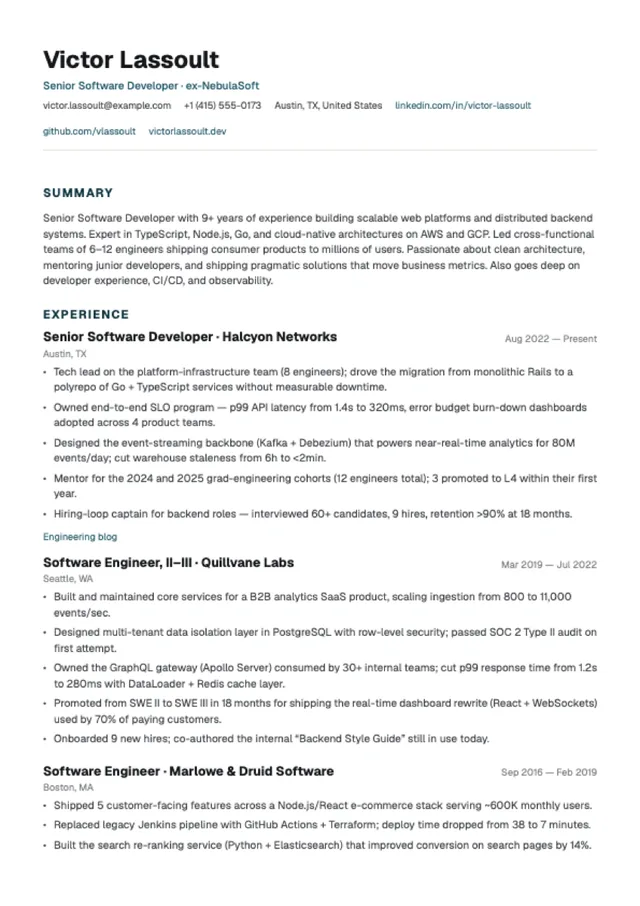
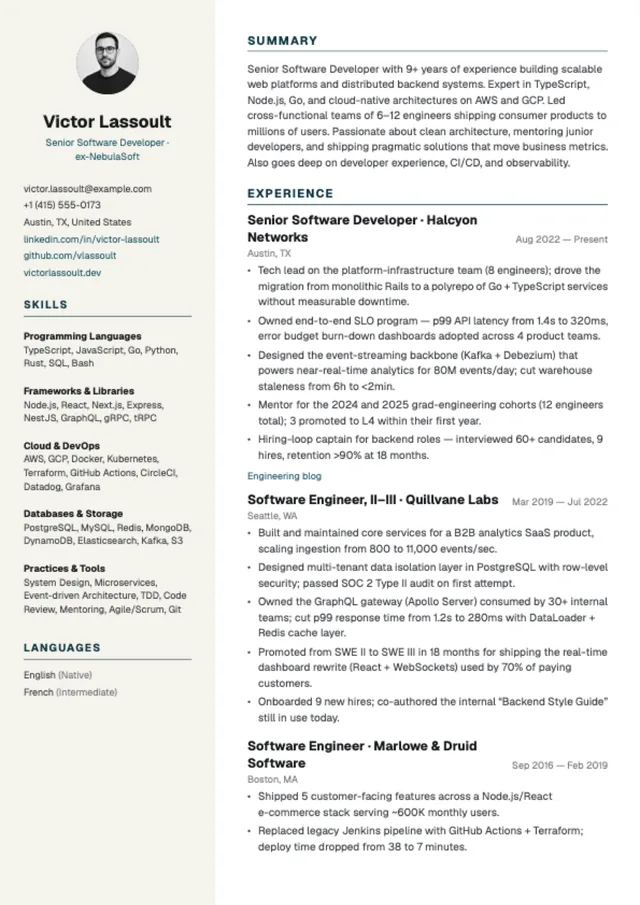
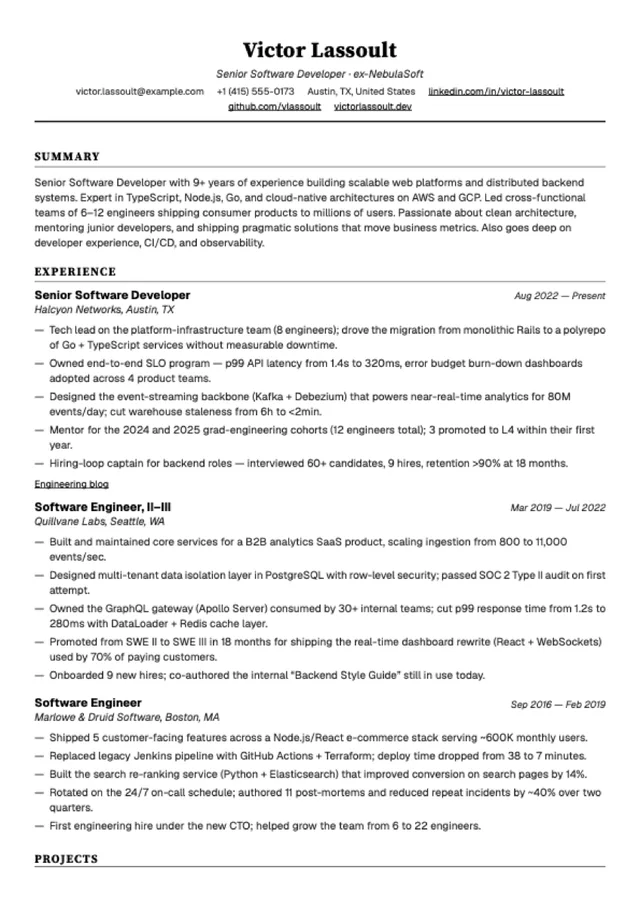
Templates that fit executive assistant resumes
Executive Assistant resume FAQ
What's the difference between an executive assistant, an administrative assistant, an office manager and a chief of staff?
An administrative assistant provides general office support — scheduling, correspondence, data entry — usually for a team or department. An executive assistant is dedicated to one senior executive (or a small set): full ownership of calendar, travel and meetings, gatekeeping, confidential materials, often drafting on the executive's behalf — higher scope and notably higher pay. An office manager owns the workplace itself — facilities, supplies, operations — rather than a specific executive. A chief of staff is a strategy role: driving initiatives and decisions across the organization on the executive's behalf. Your resume should read unmistakably as the one you're applying for.
How do I show confidentiality and judgment on paper without breaking confidence?
Show the category of trust, never the contents. “Prepared and safeguarded confidential board materials,” “handled sensitive HR and deal-related communications,” “managed investor correspondence requiring complete discretion” — each tells the reader exactly how much was trusted to you while demonstrating, in the same sentence, that you don't leak. Avoid listing “discretion” as a bare trait; unproven adjectives read as filler. The judgment half works the same way: requests resolved without escalation, conflicts prevented, the calls that never needed to reach your executive.
How do I quantify work that's mostly invisible?
Count what surrounds it. Meetings coordinated per month, calendars managed and at what level, travel bookings and the savings you negotiated, event headcount and budget, board cycles supported per year, expense items processed weekly, percentage of incoming requests you resolved without escalation — and the single best EA metric: hours returned to your executive. “Redesigned the scheduling system, cutting conflicts 40% and freeing 5 hours a week” makes invisible work legible. Even honest ranges (“15–20 daily requests triaged”) beat any unquantified duty.
How do I move from administrative assistant to executive assistant?
Reframe what you already do toward the executive dimension: the director-level calendar you keep, the travel you book, the sensitive matters you're already trusted with. Name your software fluency (Outlook, Concur, Teams), get any senior-leader exposure onto the page, and quantify everything. A CAP or PACE certification can add credibility while your title is still junior. Then target EA openings supporting VPs or single executives as the bridge — the jump to C-suite support usually comes after you've proven dedicated-principal ownership once.
What's the path from EA to chief of staff?
Grow the outcomes half of your role until it outweighs the support half. Take ownership of projects end to end, run operating-rhythm and follow-up processes, build systems others adopt, mentor junior admins, and pick up a project-management credential to formalize it. On the resume, shift your strongest bullets from tasks (“coordinated meetings”) to initiatives (“led the quarterly planning process across four departments”). Chief-of-staff hiring looks for exactly that evidence — strategic scope held reliably — and senior-EA-to-CoS is now a well-recognized promotion path.
Is the EA profession dying because of AI and automation?
The honest data: BLS projects a slight decline for the occupation overall, as routine scheduling and expense tasks automate — but around 50,000 openings a year continue from replacement, and pay at the top of the market keeps rising. What's disappearing is the purely transactional slice of the work; what's premiumizing is judgment — gatekeeping, board exposure, confidential matters, project ownership. That's why this guide pushes quantified judgment and the chief-of-staff signals: the more your resume shows the un-automatable half, the stronger your position in a consolidating field.
Is it true that ATS software auto-rejects most resumes?
No — the “75% of resumes are auto-rejected” claim traces to a 2012 sales pitch by a vendor that folded the next year and never published a methodology; the large majority of recruiters report their systems don't auto-reject at all. Screening software parses, stores and ranks resumes so humans can search them. The practical implication is findability, not fear: name your tools and skills in the posting's exact words, keep a clean single-column layout without tables or text boxes, and put keywords inside real outcome sentences. Resumap's ATS check scores your parse and keyword match against a specific job.
More resume examples
Your executive assistant resume, done properly — free.
Unwatermarked PDF, ATS-safe templates, and a real score against any posting when you want it.
Build my resume