
Schools hire on credentials they have to document, then on numbers they already collect.
A district HR office cannot place you until it can evidence your eligibility — the license, the endorsement area, the paraprofessional qualification route, the background clearance. That paperwork decides who gets a first look, and most applicants leave it implicit. What decides the second look is different: schools already track attendance, credits, referrals, growth and graduation, so a candidate who writes in those units is speaking the language of the principal reading, while everyone else writes about their passion for helping children learn.
- Roles covered
- 4 guides
- First check
- Credential + clearance
- Context
- Class size or caseload
- Outcomes
- Data the school already has
Reflects US school hiring practice as reviewed in 2026. Licensure, endorsements, paraprofessional qualification routes and substitute permits are set state by state and sometimes district by district — always name the specific instrument your state issues rather than a generic description of it.
State the exact credential, because someone has to file it
Districts operate under rules they must be able to evidence: a licensed teacher in the endorsement area, a paraprofessional who meets the ESSA route (two years of college, an associate degree, or a formal assessment such as ParaPro), a counselor with the state's certificate or services license, a substitute with a current permit and completed fingerprint clearance. Write the instrument, the state, the year and the status. A file that leaves HR guessing waits behind files that do not — and that is usually all that separates the two.
What every education resume has to prove
The credential, named the way your state names it
Colorado issues a Special Services Provider license; other states issue certificates or credentials. Endorsement areas, grade bands and expiry all matter. If something is in progress, give the date rather than leaving a gap — 'certification expected June 2026' is a usable fact, silence is not.
The scale you carried
Class size, caseload, student-to-counselor ratio, number of students with IEPs you supported, grade bands, building enrollment. Without it, every outcome you claim is unreadable — a school cannot tell whether it was impressive or ordinary.
Outcomes from data the school already holds
Attendance and chronic absenteeism, credit recovery and on-time graduation, discipline referrals, assessment growth, FAFSA completion, post-secondary enrollment. These are checkable, which is what makes them believable. Scope them to your students and name collaborators where the work was genuinely shared.
Safety, behavior and confidentiality practice
CPI or Safety-Care, CPR and First Aid, mandated-reporter training, crisis-team roles, risk protocols. Schools carry real liability here, and these are frequently the practical difference between two similar candidates. The same instinct governs how you write about students — patterns and cohorts, never identities.
Education resume examples by role
Each guide has a full annotated example, summaries by seniority and the keywords that role is filtered on.
Teacher
Teacher resume examples that put the license where screeners look.
See the exampleTeaching Assistant
Teaching assistant resume examples that clear the district's paperwork.
See the exampleSubstitute Teacher
Substitute teacher resume examples for the person filling tomorrow's absence.
See the exampleSchool Counselor
School counselor resume examples that show a program, not a queue.
See the example
Bullets that get read, and the ones that do not
Same experience, rewritten. The difference is always the same thing: something a reader can check.
Passionate about helping students reach their full potential.
Carried a 410-student caseload across grades 10–12; chronic absenteeism on that caseload fell from 18% to 11% over two years after rebuilding the attendance intervention with the assistant principal.
Why: Warmth is the baseline in this field and distinguishes nobody. Scale plus a movement in data the district already tracks is the version that gets read twice.
Assisted students with special needs in the classroom.
Supported 8 students with IEPs across inclusion and resource settings — implemented behavior intervention plans and recorded the daily data used in quarterly progress reports.
Why: Names the caseload, the settings and the actual work. Most paraprofessional postings are special education seats, and this is the language they are written in.
Substitute taught in various schools and grade levels.
Roughly 320 assignment days across four districts in grades 6–12, mostly maths and science; requested by name at three schools and on two preferred-substitute lists.
Why: Fill reliability is the product of substitute work. Days, bands and being requested back are exactly what a coordinator would phone your last school to ask.
Used technology to enhance classroom learning.
Ran a 1:1 Chromebook classroom in Google Classroom — moved weekly formative checks online and used the results to regroup students every Friday.
Why: Names the platform and, more importantly, what the technology changed about instruction. 'Enhanced learning' describes an intention, not a practice.
Keywords that recur across education postings
Function-wide terms, not role-specific ones. Mirror them verbatim when the posting uses them — filters match strings, not meaning.
| Keyword | Priority |
|---|---|
| state teaching license / certification | High |
| classroom management | High |
| differentiated instruction | High |
| IEP / 504 plans | High |
| student assessment and data | High |
| curriculum planning | High |
| small-group instruction | High |
| family communication | High |
| MTSS / tiered support | Medium |
| social-emotional learning (SEL) | Medium |
| background check / fingerprint clearance | Medium |
| ELL / multilingual learners | Medium |
| FERPA / confidentiality | Medium |
| student information system | Medium |
How the resume changes as you move up
Support roles (paraprofessional, substitute)
Eligibility first — qualification route, permit, clearance, availability. Then scale and reliability: caseload, class sizes, days worked, whether schools ask for you again.
Classroom teacher
License and endorsements up top, then class size, subjects, and growth or achievement data. Curriculum you built and interventions you ran distinguish you from candidates who only delivered someone else's plan.
Specialist (counselor, interventionist, coach)
Caseload ratio, program structure and the data you moved. This is where the resume shifts from delivering instruction to running something — needs assessment, tiered support, evaluation.
Leadership (department, dean, administration)
Teams led, teachers coached and retained, schedules and budgets owned, school-wide metrics. Administrative credentials belong beside the teaching license, and the classroom record stays as proof you came up through it.
How these resumes actually get filtered
School districts run applications through applicant tracking systems — frequently a shared regional platform — before anyone reads them, and the first pass is a compliance check: license, endorsement area, clearance, qualification route. That is why the credential block belongs in the top third in the state's own vocabulary. The human pass is done by a principal or department head, often in a hurry between other duties and increasingly on a phone, looking for grade bands, subject areas, scale and one or two outcomes. Both stages reward the same thing: a plain, single-column document whose first third answers eligibility and scope without scrolling.
See what four real ATS parsers did with 36 resume layoutsMistakes specific to education resumes
Leaving the credential route implicit
Name the license, endorsement, ESSA qualification route or permit with state and status. It is a compliance record someone must file.
Writing about passion instead of practice
Every applicant cares about children. Use the space for class size, caseload, interventions and the data that moved.
Including identifiable student detail
FERPA binds you. Describe needs, cohorts and settings — never a child a colleague could recognize.
Omitting class size, caseload or ratio
Without scale, no outcome on the page can be interpreted. One clause fixes every bullet that follows.
Skipping safety and behavior training
CPI, CPR, First Aid, mandated reporter. Cheap to hold, liability-relevant, and often the tiebreak.
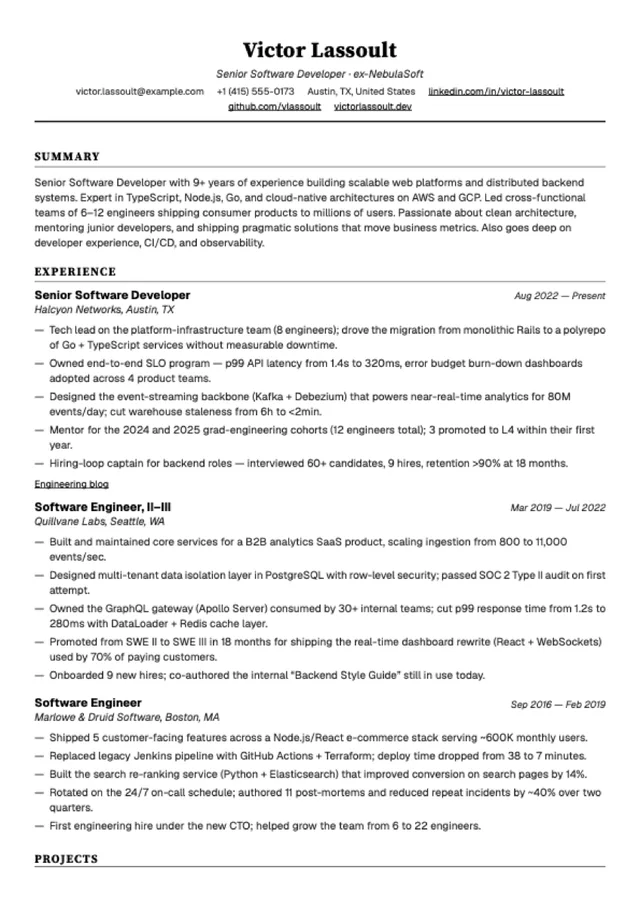
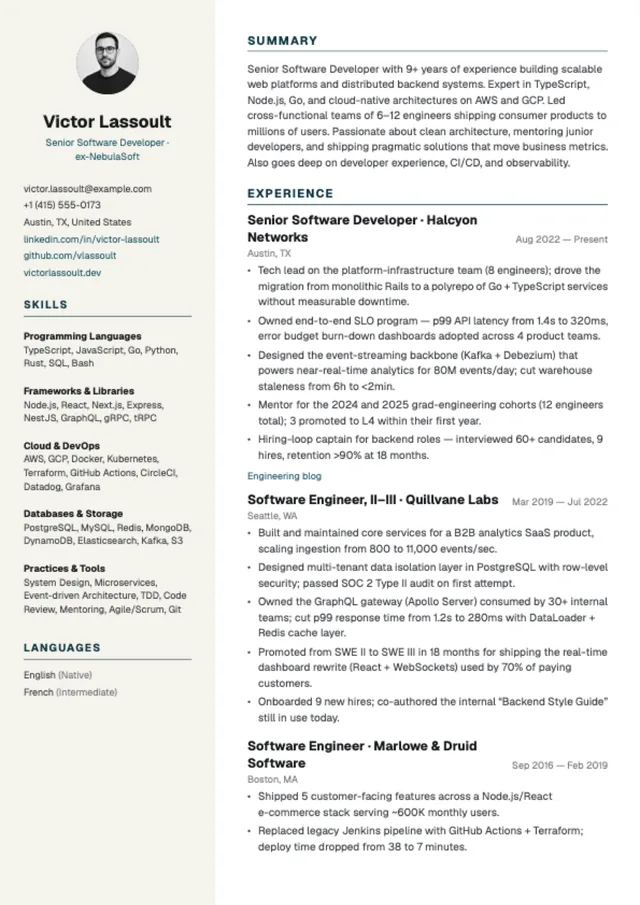
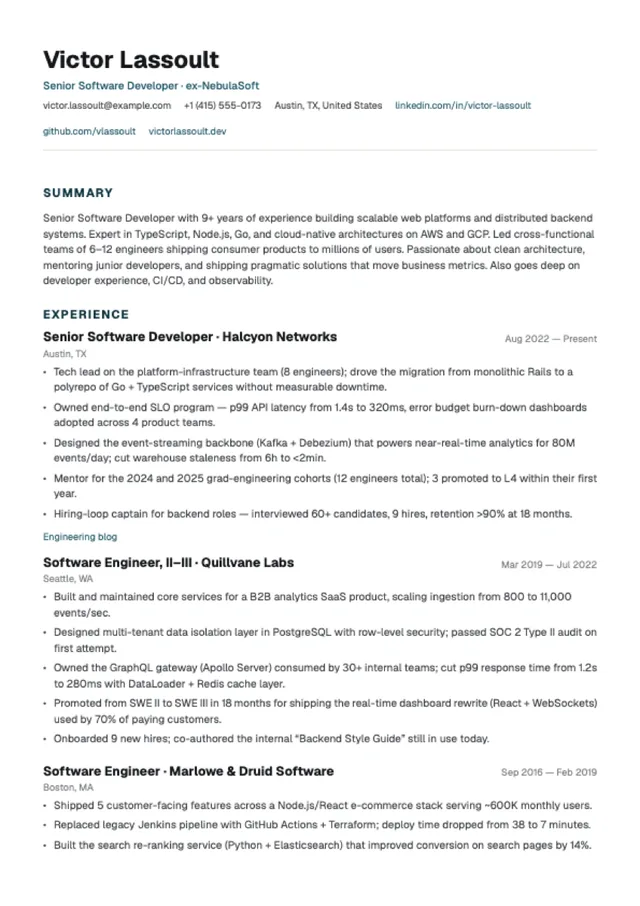
Templates that suit education resumes
Education resume FAQ
What goes at the top of an education resume?
The credential and clearance: the license or certificate with state, endorsement area and status; for paraprofessionals the ESSA qualification route; for substitutes the permit and completed background check. Districts must be able to document eligibility before they can place you.
What outcomes can school staff legitimately claim?
The data the school already collects — attendance and chronic absenteeism, assessment growth, credit recovery and on-time graduation, discipline referrals, FAFSA completion. Scope them to your students or caseload, and name collaborators where the work was shared. Checkable numbers are the believable ones.
How do I write about students without breaking confidentiality?
Describe needs, settings and cohorts, never identities: 'eight students with IEPs across inclusion and resource settings', 'a nonverbal student using an AAC device'. FERPA applies to every school employee, and a resume that leaks is answering the hiring question badly.
I am changing careers into education — what counts as experience?
Coaching, tutoring, camp, childcare, youth programs, training adults, and caring for a family member with disabilities all demonstrate the transferable core: managing a group, following a plan, documenting what happened. Write them as jobs with ages, group sizes and responsibilities, then sort out the credential route, which cannot be substituted.
Does the resume layout matter for district applications?
Yes. District systems parse applications before a human sees them, and decorative templates are where the text order breaks — we tested 36 layouts through four production parsers and published the per-template results. A plain single column keeps the credential block where the screener expects it.
Other job functions
Build it on a template that has been through a real parser.
Unwatermarked PDF export, no subscription, and a score against any posting when you want one.
Build my resume