
Hospitality hires on volume, venue and whether you will show up.
A general manager with a shift to fill is asking three questions. Have you worked somewhere as busy as this. Do you know this kind of service. And are you reliable, because the last two people were not. Covers per shift, venue type, and a plain record of tenure answer all three faster than any list of adjectives about being a people person.
- Roles covered
- 4 guides
- Screened on
- Volume + venue type
- Typical length
- 1 page
- Certs
- Food safety, alcohol
Reflects general US and European hospitality hiring practice as reviewed in 2026. Certification names (food handler, alcohol service) are jurisdiction-specific.
Covers, venue and service style — the three numbers that place you
'Server at a restaurant' could be a 40-seat neighbourhood bistro or a 300-cover hotel dining room on a Saturday. Write the venue type, the seat count and the covers you personally handled: 'fine dining, 90 seats, 60–80 covers a night, six-table section'. Add the service style — à la carte, banquet, high-volume bar, speciality coffee, quick service. A manager can then tell in one line whether you will cope with their Friday, which is the only thing they are really trying to establish.
What every hospitality and food service resume has to prove
Volume you personally carried
Covers per shift, section size, drinks or transactions per hour, tickets during peak. Anyone can work in a busy restaurant; the number says what you handled inside it.
Venue type and service style
Fine dining, casual, hotel, banquet, nightclub, cafe, quick service. Skills transfer unevenly across these — a strong bartender from a cocktail bar is not automatically a strong high-volume club bartender, and managers know it.
Certifications and the legal basics
Food handler card, ServSafe, alcohol service certification (TIPS, RBS, or the local equivalent), allergen training. These are cheap to obtain, frequently required, and their absence quietly removes you from consideration.
Reliability, stated without apology
Tenure is the strongest signal in a function with heavy turnover. Two years at one venue is worth writing plainly. Promotions, trainer roles, opening or closing responsibility and key-holding all say the same thing: you were trusted with the place.
Hospitality & Food Service resume examples by role
Each guide has a full annotated example, summaries by seniority and the keywords that role is filtered on.
Server
Server resume examples that carry a full section.
See the exampleBartender
Bartender resume examples that pour proof, not adjectives.
See the exampleBarista
Barista resume examples that show craft and speed, not a drink list.
See the exampleChef
Chef resume examples that plate covers, food cost, and control.
See the example
Bullets that get read, and the ones that do not
Same experience, rewritten. The difference is always the same thing: something a reader can check.
Provided excellent customer service in a fast-paced restaurant.
Served a six-table section in a 90-seat à la carte room, 60–80 covers a night; averaged about 19% in tips against a house average of 15%.
Why: Section size, covers and a comparative tip figure. Tips relative to the house average are the closest thing hospitality has to a performance metric.
Made drinks and served customers at a busy bar.
Worked a three-deep bar on weekends — roughly 300 drinks a shift across a 40-item cocktail list; trained four new bartenders on the spec book.
Why: Volume, complexity and evidence you were trusted to train. 'Busy' is the word every hospitality resume uses and none of them define.
Prepared food according to recipes and standards.
Ran the sauté station for 120-cover services; wrote six specials a week within a 28% food-cost target and held it across two quarters.
Why: Station, covers and a cost number. Food cost is the metric a head chef is measured on, so a cook who speaks it reads as ready for the next level.
Helped train new staff members.
Trained 11 new servers over two years as the shift trainer; ran opening and closing as key-holder on four shifts a week.
Why: Counts and responsibilities. Key-holding is a trust signal that costs one clause and separates you from everyone else on the floor.
Keywords that recur across hospitality and food service postings
Function-wide terms, not role-specific ones. Mirror them verbatim when the posting uses them — filters match strings, not meaning.
| Keyword | Priority |
|---|---|
| Food safety / ServSafe | High |
| POS systems (Toast, Square) | High |
| Customer service | High |
| Cash handling | High |
| Upselling | High |
| Health and safety compliance | High |
| Allergen awareness | Medium |
| Inventory / stock control | Medium |
| Opening and closing procedures | Medium |
| Team training | Medium |
| Alcohol service certification | Medium |
| Menu knowledge | Medium |
| Multitasking under pressure | Medium |
| Conflict resolution | Medium |
How the resume changes as you move up
First hospitality job
Reliability, availability and the certifications. Any customer-facing or high-volume experience counts — retail, events, volunteering. Say plainly which shifts you can work; managers are solving a rota problem.
Experienced floor or bar staff
Volume and venue detail carry the page. Add tips against house average, section size, spec-book depth, and any training or key-holding responsibility.
Supervisor / shift lead
Rota, cash-up, stock, complaint handling, opening and closing. Numbers move from your own output to the shift's: covers per service, team size, waste or variance.
Management and head chef
Labor and food cost percentages, revenue per service, staff retention, health-inspection scores, menu development and supplier negotiation. Retention is the number most owners hire on.
How these resumes actually get filtered
Hospitality hiring is fast and often informal — a general manager scanning applications between services, sometimes on a phone, sometimes with a shift to fill this week. That favours a plain one-page resume with venue, volume and availability visible without scrolling. Larger groups and hotel chains run applications through an applicant tracking system first, where certification names and POS systems are matched literally, so write ServSafe, Toast or Square exactly as the posting does. Across both routes, tenure does quiet work: in a function where turnover is the manager's biggest cost, a candidate who stayed two years anywhere is already ahead.
See what four real ATS parsers did with 36 resume layoutsMistakes specific to hospitality and food service resumes
Writing 'fast-paced environment' with no numbers.
Covers, seats, drinks per shift, transactions per hour. It is the same sentence with information in it.
Leaving off food-safety or alcohol certification.
List it with the expiry, or get it before applying. Some jurisdictions make it a legal condition of the shift, and a manager will take the candidate who already has the card.
Hiding short stints by omitting them.
Seasonal and event work is normal here. Group it — 'seasonal and event work, summer 2024' — rather than leaving unexplained gaps that read as something worse.
A long list of personality adjectives at the top.
'Passionate, hardworking, team player' is on every resume in the pile. Replace with two lines of venue, volume and availability.
Not saying when you can work.
Weekends, evenings, holidays, split shifts — put it in the summary. Availability is frequently the deciding factor between two equal candidates.
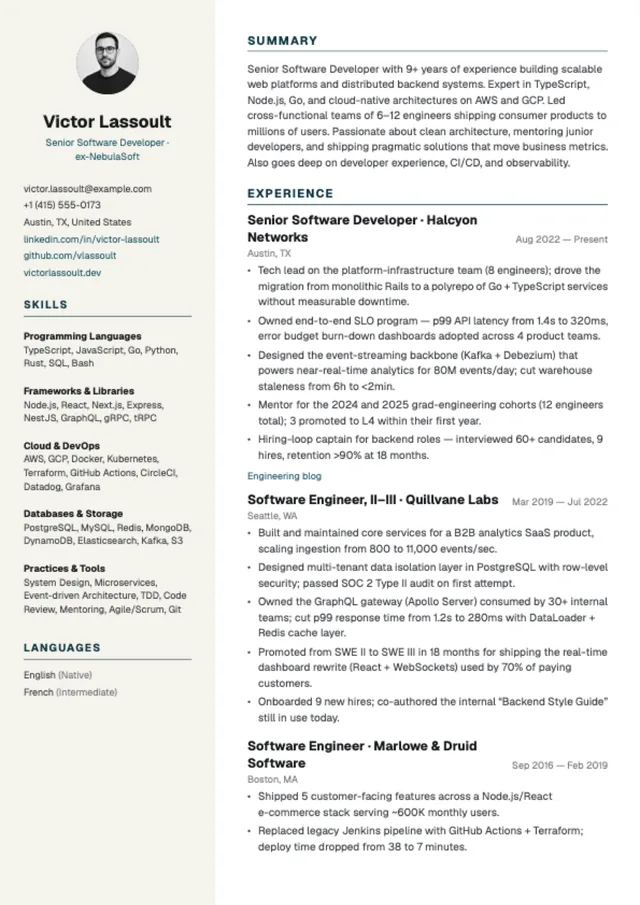
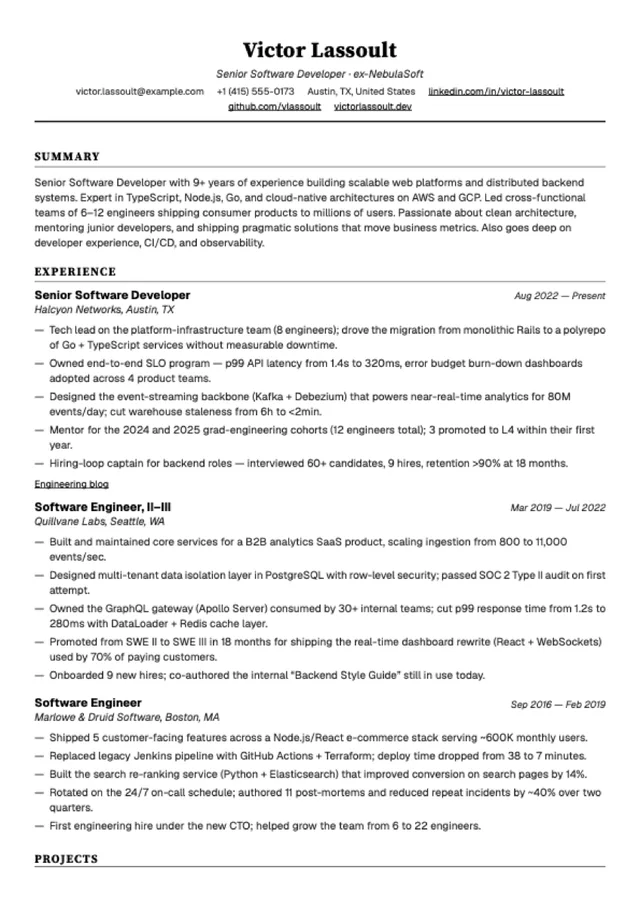
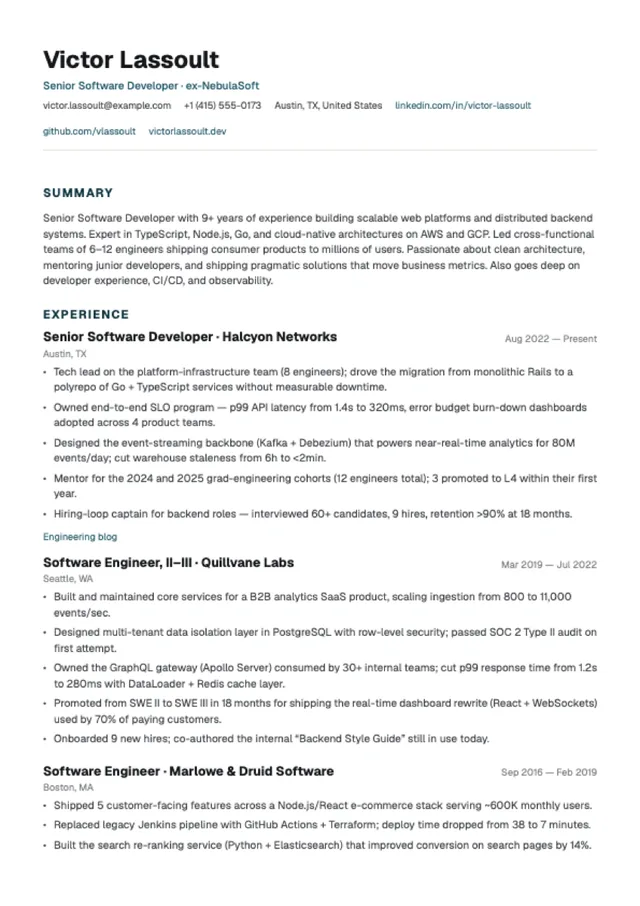
Templates that suit hospitality and food service resumes
Hospitality & Food Service resume FAQ
How do I write a hospitality resume with no experience?
Lead with the certifications and availability, then use any work that proves you can handle people and pressure — retail, events, sports, care for family members. Managers hire attitude and availability at entry level; the craft is taught on shift.
Should I include tips or sales figures?
Yes, when they are comparative. 'Averaged 19% against a 15% house average' or 'highest dessert attachment on the team for three months' is real evidence. A raw tip total without context tells nobody anything.
How do I handle lots of short jobs?
Group them by type and period rather than listing each. Seasonal and event work is expected in this function; the thing to avoid is an unexplained gap, not a short contract.
Do chefs need a different resume from front of house?
Same structure, different numbers. Chefs lead with stations, covers, food-cost percentage, menu development and kitchen size; front of house leads with section size, covers, sales and service style.
Is a photo or a designed template a good idea?
Keep it plain. Hotel groups and chains put applications through parsing software where decorative layouts are the ones that break, and an independent manager just wants to read it quickly on a phone.
Other job functions
Build it on a template that has been through a real parser.
Unwatermarked PDF export, no subscription, and a score against any posting when you want one.
Build my resume